1.- Typing - typing web.com -> advanced lesson we must complete the advanced lesson and complete all the ones that go before it
2.- Audio - editing -> radio program of 3 minutes, it must have music and voice, can be an interview, music, documentary... we can use audacity that is free, or movie maker wich is worse and I will not use, the best is Garage Band that comes with the Mac or iMovie but Garage Band is must better
3.- Digital Poster Making - glosster.com -> we must do a digital poster on any subject we want, it can be for a school project also
lunes, 12 de abril de 2010

miércoles, 10 de marzo de 2010
Scribus
Scribus is a desktop publishing (DTP) application, released under the GNU General Public License as free software. It is based on the free Qt toolkit, therefore native versions are available for Linux, Unix-like, Mac OS X, OS/2, and Microsoft Windows. It is known for its broad set of page layout features, comparable to leading non-free applications such as Adobe PageMaker, PagePlus, QuarkXPress or Adobe InDesign.
Scribus is designed for flexible layout and typesetting and the ability to prepare files for professional quality image setting equipment. It can also create animated and interactive PDF presentations and forms. Example uses include writing small newspapers, brochures, newsletters, posters and books.
Scribus supports most major image formats including scalable vector graphics (SVG). Professional type/image setting features include CMYK colors and ICC color management. It has a built-in scripting engine using Python. It is available in more than 24 languages.
Printing is achieved using its own internal level 3 PostScript driver, including support for font embedding and sub-setting with TrueType, Type 1 and OpenType fonts. The internal driver supports full Level 2 PostScript constructs and a large subset of Level 3 constructs.
PDF support includes transparency, encryption and a large set of the PDF 1.4 spec as well as PDF/X3, including interactive PDFs form fields, annotations and bookmarks. While PDF export is very good, it is not currently able to import/edit PDF files, and PDFs exported from Scribus 1.3.3.x and earlier are not searchable in Acrobat Reader if the fonts were outlined/subsetted as vector objects.
The file format, called SLA, is based on XML. Text can be imported from OpenDocument text documents, as well as OpenOffice.org Writer, Microsoft Word and HTML formats (although some limitations apply).
Scribus cannot read or write the native file formats of commercial programs like QuarkXPress, Microsoft Publisher, or InDesign; the developers feel that reverse engineering those file formats would be prohibitively complex and could risk legal action from the makers of those programs.
Due to licensing issues, the software package does not include support for the Pantone color matching system (PMS), which is included in some commercial DTP applications.
Although Scribus supports Unicode character encoding, it currently does not properly support complex script rendering and so cannot be used with Unicode text for languages written with Arabic, Hebrew, Indic and South East Asian writing systems.
Scribus is designed for flexible layout and typesetting and the ability to prepare files for professional quality image setting equipment. It can also create animated and interactive PDF presentations and forms. Example uses include writing small newspapers, brochures, newsletters, posters and books.
Scribus supports most major image formats including scalable vector graphics (SVG). Professional type/image setting features include CMYK colors and ICC color management. It has a built-in scripting engine using Python. It is available in more than 24 languages.
Printing is achieved using its own internal level 3 PostScript driver, including support for font embedding and sub-setting with TrueType, Type 1 and OpenType fonts. The internal driver supports full Level 2 PostScript constructs and a large subset of Level 3 constructs.
PDF support includes transparency, encryption and a large set of the PDF 1.4 spec as well as PDF/X3, including interactive PDFs form fields, annotations and bookmarks. While PDF export is very good, it is not currently able to import/edit PDF files, and PDFs exported from Scribus 1.3.3.x and earlier are not searchable in Acrobat Reader if the fonts were outlined/subsetted as vector objects.
The file format, called SLA, is based on XML. Text can be imported from OpenDocument text documents, as well as OpenOffice.org Writer, Microsoft Word and HTML formats (although some limitations apply).
Scribus cannot read or write the native file formats of commercial programs like QuarkXPress, Microsoft Publisher, or InDesign; the developers feel that reverse engineering those file formats would be prohibitively complex and could risk legal action from the makers of those programs.
Due to licensing issues, the software package does not include support for the Pantone color matching system (PMS), which is included in some commercial DTP applications.
Although Scribus supports Unicode character encoding, it currently does not properly support complex script rendering and so cannot be used with Unicode text for languages written with Arabic, Hebrew, Indic and South East Asian writing systems.
martes, 9 de marzo de 2010
GIMP
GIMP (the GNU Image Manipulation Program)
GIMP is a free software raster graphics editor. It isprimarily employed as an image retouching and editing tool. In addition to offering freeform drawing, GIMP can accomplish essential image workflow steps such as resizing, editing, and cropping photos, combining multiple images, and converting between different image formats. GIMP can also be used to create basic animated images in the GIF format. At present GIMP is entirely suitable for amateur or professional work with images intended for viewing on monitors and printing on inkjet printers; GIMP does not yet offer the CMYK separation and color management functionality which is essential for prepress work. The product vision for GIMP is to become a high-end graphics application for the editing and creation of original images, icons, graphical elements of web pages and art for user interface elements.
It i also sometimes compared to Photoshop and as a good alternative to it, though maybe not so much level in profesional ground.
lunes, 1 de marzo de 2010
Maria Amelia, la Blogera de 95 Años
Maria Amelia, de la provincia gallega de Murxia recibio por su 95 cumpleaños un blog de su nieto. Se entusiasmo con el y gracias a el olvido la soledad que sentia anteriormente y se metio de cabeza en la comunidad del internet.
 Murio en 2006, casi 3 años despues de meterse en el mundo de los blogs. Aun asi dejo su legado y mensaje en España y todo el mundo. Durante sus tres años en la red, Amelia intento meter en el Nuevo Mundo que es la tecnologia, a otros ancianos como ella que desconocian el elixir de vida que ella habia descubierto gracias a su nieto.

Ella incito el movimiento del Viejo Pescador, que busca atraer a su mundo a los ancianos que no conocen aun la soledad que Amelia evito gracias a su blog y sus seguidores. Estos quieren promever el premio de Premio Internacional para Blogueros Mayores.
Amelia recibio el prestigioso premio internacional BOBs que se otorga en Alemania, y Zapatero tambien la recibio. Y todos los seguidores de Amelia, aun ahora, intentan llevar a los mas mayores de la sociedad hacia la otra comunidad que es el internet.
Blogs en Honor a Amelia:
http://premiomariaamelialopez.blogspot.com
El Blog de Amelia:
http://amis95.blogspot.com.
Murio en 2006, casi 3 años despues de meterse en el mundo de los blogs. Aun asi dejo su legado y mensaje en España y todo el mundo. Durante sus tres años en la red, Amelia intento meter en el Nuevo Mundo que es la tecnologia, a otros ancianos como ella que desconocian el elixir de vida que ella habia descubierto gracias a su nieto.“Mi blog es para entretenerme y comunicarme con mis blogueros. Y para animarEsto es uno de los principios que Amelia dejo tras si despues de su muerte.
a todos los ancianos a que tengan el Internet. Y para que sus familiares hagan
un esfuerzo por enseñarles. Así podrán conocer gente nueva, comunicarse y
aprender cosas todos los días. A mí me sacó 20 años de encima. Todos los
ancianos, con un Internet”.

Ella incito el movimiento del Viejo Pescador, que busca atraer a su mundo a los ancianos que no conocen aun la soledad que Amelia evito gracias a su blog y sus seguidores. Estos quieren promever el premio de Premio Internacional para Blogueros Mayores.
Amelia recibio el prestigioso premio internacional BOBs que se otorga en Alemania, y Zapatero tambien la recibio. Y todos los seguidores de Amelia, aun ahora, intentan llevar a los mas mayores de la sociedad hacia la otra comunidad que es el internet.
Blogs en Honor a Amelia:
http://premiomariaamelialopez.blogspot.com
El Blog de Amelia:
http://amis95.blogspot.com.
lunes, 11 de enero de 2010
Questions & Answers: Fonts
1- What is a font?
It is the design for a set of characters. It's the combination typeface and design characteristics of pitch, spacing and size.
2- What is a pitch? And fixed pitch?
It is the width of a character in a font, the number of characters that can fit in an inch. Common pitch values are from 10 to 12.
Fixed pitch (or monospace) is when all the characters of a same font have the same pitch.
3- What is a font family? Name some...
It is a group of fonts that are similar in the design. Memebers of this family can be bold or italic. Some are Times New Roman, Script, Comic Sans, Arial and Courier. And the diferent categories are... serif, sans-serif, cursive, fantasy and monospace.
4- What is the difference between font and typeface?
Times New Roman is a typeface, which defines the shape of the character. But it has many different fonts (sizes and styles).
5- What is the difference between vector and bitmap fonts?
Bit map is formed by an arranged number of dots, so you need a design for each kind of font in each kind of typeface. Instead vector is made geomatrically so it can be scaled to any size or style. So you only need one design per typeface.
6- What are the synonyms of vector and bitmap fonts?
7- Which of these two is scalable?
The Vector Graphics System.
8- What are the most widely used scalable font systems?
PostScript and TrueType.
9- What kind of printers use scalable fonts?
Laser printers.
10- What is tha main problem using fonts on the web?
They do not look very good when very samll like iin screen size.
11- How do you call the web-safe fonts?
Those that are not hard to read.
12- What are the safest fonts on the web?
Arial, Arial Black, Coriour New, Georgia, Times New Roman, Verdana and Trenbuchet MS.
13- Why should you choose "sans serif" fonts for the screen?
You shouldn't because experts say it is harder to read. http://www.webopedia.com/TERM/S/sans_serif.html
14- What is the simplest solution if you want to use a very specific font?
15- Choose your favorite font.
InkpenScript2 or Blackladder ITC or French Script
It is the design for a set of characters. It's the combination typeface and design characteristics of pitch, spacing and size.
2- What is a pitch? And fixed pitch?
It is the width of a character in a font, the number of characters that can fit in an inch. Common pitch values are from 10 to 12.
Fixed pitch (or monospace) is when all the characters of a same font have the same pitch.
3- What is a font family? Name some...
It is a group of fonts that are similar in the design. Memebers of this family can be bold or italic. Some are Times New Roman, Script, Comic Sans, Arial and Courier. And the diferent categories are... serif, sans-serif, cursive, fantasy and monospace.
4- What is the difference between font and typeface?
Times New Roman is a typeface, which defines the shape of the character. But it has many different fonts (sizes and styles).
5- What is the difference between vector and bitmap fonts?
Bit map is formed by an arranged number of dots, so you need a design for each kind of font in each kind of typeface. Instead vector is made geomatrically so it can be scaled to any size or style. So you only need one design per typeface.
6- What are the synonyms of vector and bitmap fonts?
7- Which of these two is scalable?
The Vector Graphics System.
8- What are the most widely used scalable font systems?
PostScript and TrueType.
9- What kind of printers use scalable fonts?
Laser printers.
10- What is tha main problem using fonts on the web?
They do not look very good when very samll like iin screen size.
11- How do you call the web-safe fonts?
Those that are not hard to read.
12- What are the safest fonts on the web?
Arial, Arial Black, Coriour New, Georgia, Times New Roman, Verdana and Trenbuchet MS.
13- Why should you choose "sans serif" fonts for the screen?
You shouldn't because experts say it is harder to read. http://www.webopedia.com/TERM/S/sans_serif.html
14- What is the simplest solution if you want to use a very specific font?
15- Choose your favorite font.
InkpenScript2 or Blackladder ITC or French Script
lunes, 7 de septiembre de 2009
Summer Vacations in Brittany
This summer vacations I went to Brittany in northwestern France. My family and I went there from August 1st to the 21st of the same month. We did a house exchange with a family leaving near Brest through a system of exchange of houses called Intervac.

 We visited a lot of cites including Brest which was the one nearest to us. Brest was sort of ugly and like dead. All the houses were like boxes with windows, all the same, with a very cold look. But this had its explanation. During World War II, during the German occupation of France, the Nazis established a submarine base in this key strategic bay (even today it is also a French military naval base, and a very important one). Do to that the Allies bombed the city until there was not a single house left. Actually it was the most bombed city during the war. So after the war the Allies gave money to reconstruct the city, bringing the city back from the ashes as quickly and cheaply as posible. The only real thing that is good about Brest is the reconstruction of a fort that had its origins with the romans and that was expanded over the centurys, in which there is know a musuem.
 Actually when we first arrived to Brest the whole center of the city was out of boundaries for everyone, and there were policemen making sure that no one would enter the center of the city. When we asked a policeman he told us that there was a bomb!!! So when we got back to the house we had we looked on internet and we found out that actually what had happened is that they had found a bomb from WWII that had not exploded and that they had found during some excavations. And that it was quite common for this to happen.


We mostly visited the coast which is full of lighthouses do to the rocky and dangerous coasts of Brittany. We also visited the Shipwreck Coast and the Pink Granit Coast. This coasts are also full of military guard posts and military lighthouses as well as WWII bunkers and memorials to the dead French (and American) sailors, fishermen and marines that died during the both World Wars.


We also went to other cities like Quimpe, Crozon, Perros, Vannes, Concarneau, St. Malo (this last two were walled cities and St. Malo had a true medieval look)

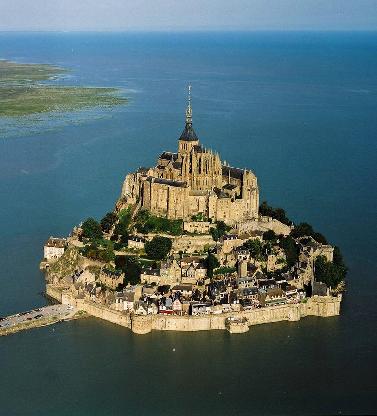
Another thing that impressed me a lot of the coast of Britanny was that the tides were extremely strong. When the tide went down, it went down for kilometers in some places, leaving many ports with out any water for hours, with the ships just sitting there. Transforming land into islands when the tide goes up. The best example of this is Mont St. Mitchel. It is a monastery on top of a rock that when the tide goes up it is an island, except for a little road (modern road) that connects it with the land. It is truly beatiful and when there is full moon or no moon the tides are extremely strong and cover 1 of the 2 parkings and completely cuts Mony St. Mitchel from the rest of the world except for that little road, and when the tied goes down almost the whole bay gets emptied. During those days the water goes at kilometers per hour and you see the tide go up, seeing the water gobble up the land at a tremendous speed. When we went there a man had to be recued by an helicopter because he got caught by the tides and has separated from the road by a now large river!!



Well that's everything about my summer vacations in Britanny!! Hope you enjoyed!!
Suscribirse a:
Entradas (Atom)
